Alex is Sprintlaw's co-founder and a legal technology leader. He holds law and media degrees from the University of Sydney and has been recognized by Australasian Lawyer, Lawyers Weekly and the Sydney Young Entrepreneur Awards for his work building Sprintlaw and improving access to business legal support.
Contents
Finding the perfect old photo, illustration, song or book excerpt can feel like a win for your brand. Maybe it fits your packaging, your website, your course materials or your next ad campaign better than anything new.
But before you use it, you need to know whether copyright has actually expired. Older doesn't always mean free to use, and the answer can change depending on who created the work, when it was published and whether it was made for a business.
The good news is that you can usually make a sensible clearance decision if you work through the right steps and keep a record of what you found.
When Does Copyright Expire In The US?
It depends on when the work was created or published, and whether it was created by an individual, jointly by several people, anonymously or as a work made for hire.
Under the US Copyright Act, the main rules are:
- Works created on or after January 1, 1978: copyright usually lasts for the author's life plus 70 years.
- Joint works created on or after January 1, 1978: copyright usually lasts for 70 years after the last surviving author's death.
- Works made for hire, anonymous works and pseudonymous works: copyright usually lasts for 95 years from first publication or 120 years from creation, whichever expires first.
- US works published before 1931: as of 2026, these are generally in the public domain in the US, subject to special rules and exceptions.
- US works published from 1931 to 1963: these often need a renewal check. If the copyright wasn't properly renewed, the work may be in the public domain. If it was renewed, the term is generally 95 years from publication.
- US works published from 1964 to 1977: renewal became automatic, so these generally last 95 years from publication.
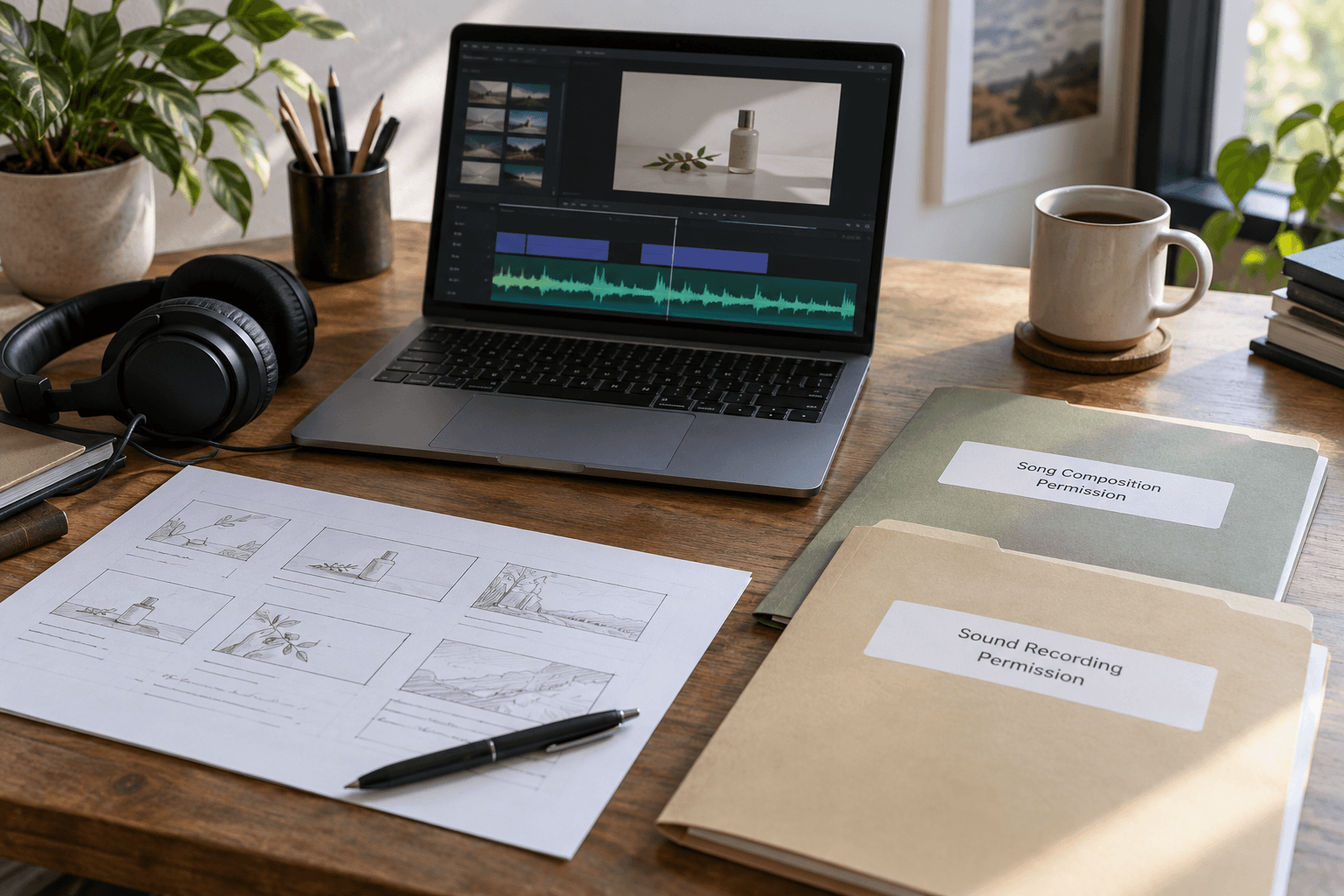
There are extra wrinkles for unpublished works, foreign works and older sound recordings. For example, a song can involve separate copyright in the musical composition and the recording. So, even if an old composition is public domain, a later recording of that song may still be protected.
If you're using older music, film, photography or international material in a commercial campaign, it's worth getting tailored advice before you rely on a public domain assumption.
Can I Use Public Domain Content In My Business?
Yes, if the copyright has expired or the work was never protected by copyright, you can usually copy, adapt, display and sell products using that public domain material without copyright permission.
For example, you might be able to use a public domain illustration on your packaging, adapt a public domain novel for a course, or print a public domain image on merchandise.
But public domain only answers the copyright question. Other legal or commercial issues can still matter, including:
- Trademark law: a vintage logo, character name or brand identifier may still be protected under the Lanham Act or state trademark rules.
- Rights of publicity and privacy: using a person's name, image or likeness in advertising can raise state law issues, especially if the person is recognizable.
- Contract terms: a museum, archive, stock site or database may have website terms of use or other terms that restrict commercial use of its scans or downloads.
- New copyright in a version: a modern translation, restoration, photo, recording, annotation or layout may have its own copyright even if the underlying work is public domain.
- False endorsement risk: your marketing shouldn't suggest a person, estate, brand or organization endorses your business if they don't.
Say Maya runs an online homewares store and wants to print a 1930 US book illustration on tea towels. In 2026, a US work published in 1930 is generally public domain. Maya can likely use the underlying illustration from that book, but she should still check that she isn't using a modern edited version, a museum's restricted scan, or a mark that customers could see as someone else's brand.
How Do I Verify That Older Content Is Really Public Domain?
You verify public domain status by checking the exact work, its publication history, its author or owner details and any copyright renewal records that apply.
Start with the exact version you want to use. A 1920 novel, a 1955 paperback edition, a 1998 translation and a 2020 audiobook can all have different rights attached to them.
Step 1: Identify The Exact Work
Write down what you're using and where you found it. Include the title, creator, publisher, publication date, edition, source, file name and any visible copyright notice.
If you're using music, separate the composition from the sound recording. If you're using an image, separate the underlying artwork from the scan or photograph you downloaded.
Step 2: Check The Dates And Creator
Look for the first publication date, not just the date on the website where you found it. For individual creators, check death dates if the life plus 70 rule may apply.
For corporate works, commissioned works, anonymous works and pseudonymous works, focus on publication and creation dates because the 95 year or 120 year rule may be more relevant.
Step 3: Search Official Copyright Records Where Needed
The US Copyright Office has copyright registration and recordation systems that can help you check registrations, assignments and renewals. For works published from 1931 to 1963, renewal records can be especially important.
For example, if a US photograph was published in 1936 with a proper copyright notice and was renewed, copyright generally runs for 95 years from publication. That means it would generally expire at the end of 2031 and enter the public domain on January 1, 2032. If it wasn't renewed when renewal was required, it may have entered the public domain much earlier.
Don't rely on a single blog post, image caption or social media comment saying something is public domain. Treat those as clues, not proof.
What If The Work Was Commissioned Or Made By A Company?
If a work was commissioned or made by a company, the answer depends on whether it qualifies as a work made for hire or whether copyright was assigned in writing.
This matters because businesses often assume they own creative work they paid for. Under US copyright law, that isn't always true.
Generally, a company may own copyright from the start if:
- an employee created the work within the scope of their employment; or
- the work falls into one of the Copyright Act's specific commissioned work categories and there's a written work for hire agreement saying it's a work made for hire.
If a contractor created the work, paying the invoice usually isn't enough by itself. Unless the work fits the work made for hire rules or there's a written copyright assignment, the contractor may still own copyright.
For older business content, this affects both ownership and duration. A true work made for hire generally has the 95 years from publication or 120 years from creation term, rather than life of the author plus 70 years.
This can come up with:
- old advertising artwork created for a brand;
- product photography commissioned by a catalog business;
- software, manuals or training materials made for a company;
- logos and packaging designs made by freelance designers;
- film, audio and promotional content created by production contractors.
If your business wants to reuse commissioned content from its own archives, look for the original employment records, contractor agreements, invoices and assignment documents. If those documents are missing or unclear, you may need a risk assessment before relaunching the content commercially.
What Records Should I Keep Before I Reuse Old Content?
You should keep a short clearance file that shows what you checked, what you concluded and why your business was comfortable using the content.
This doesn't have to be complicated. The aim is to make your decision easy to explain later if a platform, customer, rights holder or investor asks questions.
Your clearance file might include:
- screenshots of the source page and any copyright notices;
- copies of title pages, publication pages, credits and archive entries;
- notes of Copyright Office searches and renewal checks;
- copies of any licenses, permissions or assignments;
- your reasoning on the copyright term and public domain status;
- who approved the use internally and when.
Content Clearance Note: Fill-In Outline
A simple internal note can help your team stay consistent. A lawyer should tailor this before you use it as part of a formal clearance process, especially for high-value campaigns.
- Project: write the campaign, product or channel where the content will be used.
- Content Description: describe the exact image, text, music, design or other material.
- Source: record where you found it, including archive, book, database or supplier details.
- Creator And Owner Details: note the known author, publisher, company, photographer, record label or other rights holder.
- Key Dates: record creation date, first publication date, author death date if relevant and edition dates.
- Searches Completed: list Copyright Office searches, renewal checks, archive checks and any supplier confirmations.
- Legal Basis For Use: state whether you're relying on public domain status, a license, an assignment or another permission.
- Restrictions: note any trademark, publicity, contract, attribution or platform restrictions.
- Approval: record who approved the use and the date.
This kind of file can also be useful during fundraising, a business sale or a brand partnership, because content ownership and permissions often come up in due diligence.
Common Mistakes To Avoid
The most common mistake is treating anything old as free to use. That can lead to takedown notices, platform complaints, reprinting costs, ad delays or a demand for payment after you've already launched.
Other common mistakes include:
- Checking the wrong date: the upload date, reprint date or archive date may not be the first publication date.
- Ignoring renewals: many US works published from 1931 to 1963 require a renewal check before you can be confident about public domain status.
- Using a modern version: a new translation, edited edition, restored recording or high-resolution photograph can carry its own rights.
- Assuming you own contractor work: if your business paid a freelancer years ago, find the written assignment or work for hire terms before you reuse the material.
- Forgetting non-copyright risks: trademarks, publicity rights, privacy, contracts and false endorsement issues can still apply.
- Not keeping records: if you can't show your clearance process later, it may be harder to respond to a complaint or due diligence question.
A little checking upfront is usually faster and cheaper than fixing a rights problem after products have been printed, ads have gone live or a distributor has asked for proof of rights.
Frequently Asked Questions
Does copyright expire automatically?
Yes. Copyright generally expires automatically at the end of the applicable term. You don't need anyone to release it into the public domain. The hard part is working out which term applies to the exact work and whether any renewal, publication or ownership rule changes the answer.
Are all works published before 1931 free to use in 2026?
US works published before 1931 are generally in the public domain in the US in 2026. Still, you should check the exact version you're using, especially for later editions, translations, recordings, restored images and foreign works.
Can I use a public domain image from a museum website?
Maybe. The underlying image may be public domain, but the museum website may have contract terms for downloads, or the file may be a modern photograph or scan with its own restrictions. Check the source terms before using it commercially.
What happens if I get it wrong?
You could receive a takedown request, infringement claim, licensing demand or platform complaint. In a business context, the practical cost can include redesigns, lost launch time, pulled inventory and reputational damage.
Do I need to register my own copyright?
Copyright can exist automatically when you create original content, but registration can make enforcement easier in the US. If your business relies heavily on content, product designs, manuals, software, photography or marketing materials, registration may be worth considering.
Key Takeaways
- Copyright expiry depends on the work's dates, creator, publication history and whether it was made for hire.
- In 2026, US works published before 1931 are generally public domain, but later versions or recordings may still be protected.
- For US works published from 1931 to 1963, renewal checks are often essential.
- Public domain status doesn't remove trademark, publicity, privacy, contract or false endorsement risks.
- Keep a simple clearance file so your business can explain why it was comfortable using older content.
If you'd like help with checking copyright expiry, reviewing public domain content, preparing work for hire agreements or clearing older business content for commercial use, you can reach our team at (888) 449-8437 or team@sprintlaw.com. Where legal services are required, they're provided by licensed US lawyers at ElevateNext US, LLC, a trusted US law firm, through the Sprintlaw platform.
Drafted by Taylor, Sprintlaw's AI, and overseen by Alex Solo. How we write

Alex SoloCo-Founder