Alex is Sprintlaw's co-founder and a legal technology leader. He holds law and media degrees from the University of Sydney and has been recognized by Australasian Lawyer, Lawyers Weekly and the Sydney Young Entrepreneur Awards for his work building Sprintlaw and improving access to business legal support.
Contents
Can I use copyrighted music in my video? Usually, only if you have the right permission for the way your business wants to use it.
That sounds simple, but music rights can get fiddly because a single song can involve more than one owner and more than one type of license. A track that's fine for a personal TikTok may not be fine for a paid ad, online course, website promo or customer-facing brand video.
The good news is that you don't need to become a music lawyer to make sensible decisions. You just need to know what rights to check, what your platform terms of use actually cover and when to get a written music license agreement in place.
Can I Use Copyrighted Music In My Business Video?
Yes, you can use copyrighted music in your business video if you have permission that covers your exact use.
Under the US Copyright Act, copyright owners have exclusive rights to do things like reproduce, distribute, publicly perform and create derivative works from their music. When you add a song to a video, upload that video, run it as an ad or include it in an online course, you may be using several of those rights at once.
For business videos, permission usually needs to cover commercial use. That means use connected with promoting, selling or running your business, not just personal entertainment.
You should be especially careful with music in:
- paid social media ads
- organic business posts and reels
- website hero videos and product demos
- YouTube videos that promote your services
- online courses, webinars and training materials
- podcasts or video podcasts with music intros
- event videos, testimonials and case studies
There's no general rule that says you can use a small part of a song just because your video is short. A 12-second clip can still create an issue if it uses protected music without permission.
Fair use can apply in some US copyright situations, but it's fact-specific and risky to rely on for marketing content. If your video is promoting your business, selling a product or building your brand, you should assume you need a license unless a licensed attorney has reviewed your specific situation.
What Music Rights Do I Need For Marketing Videos?
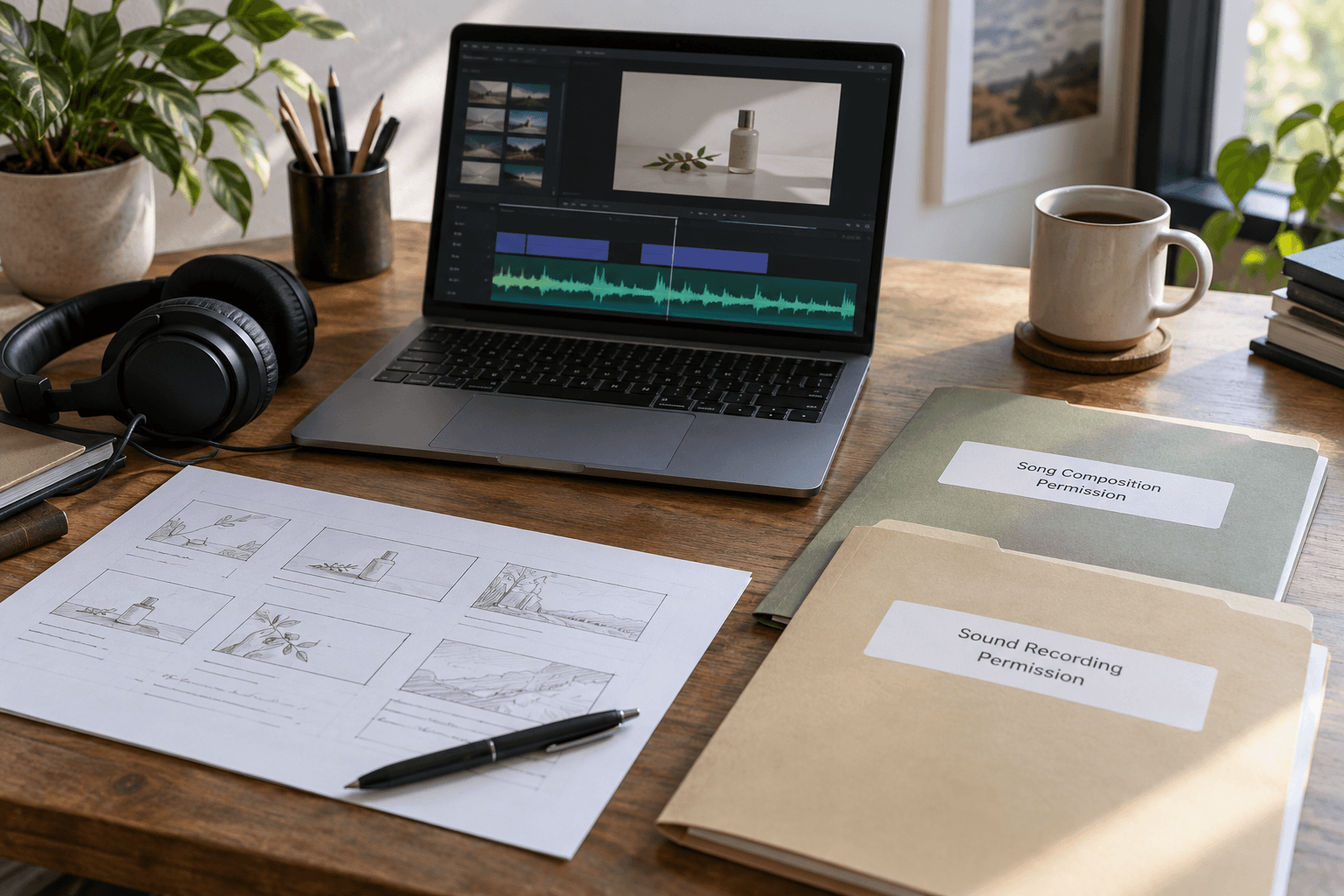
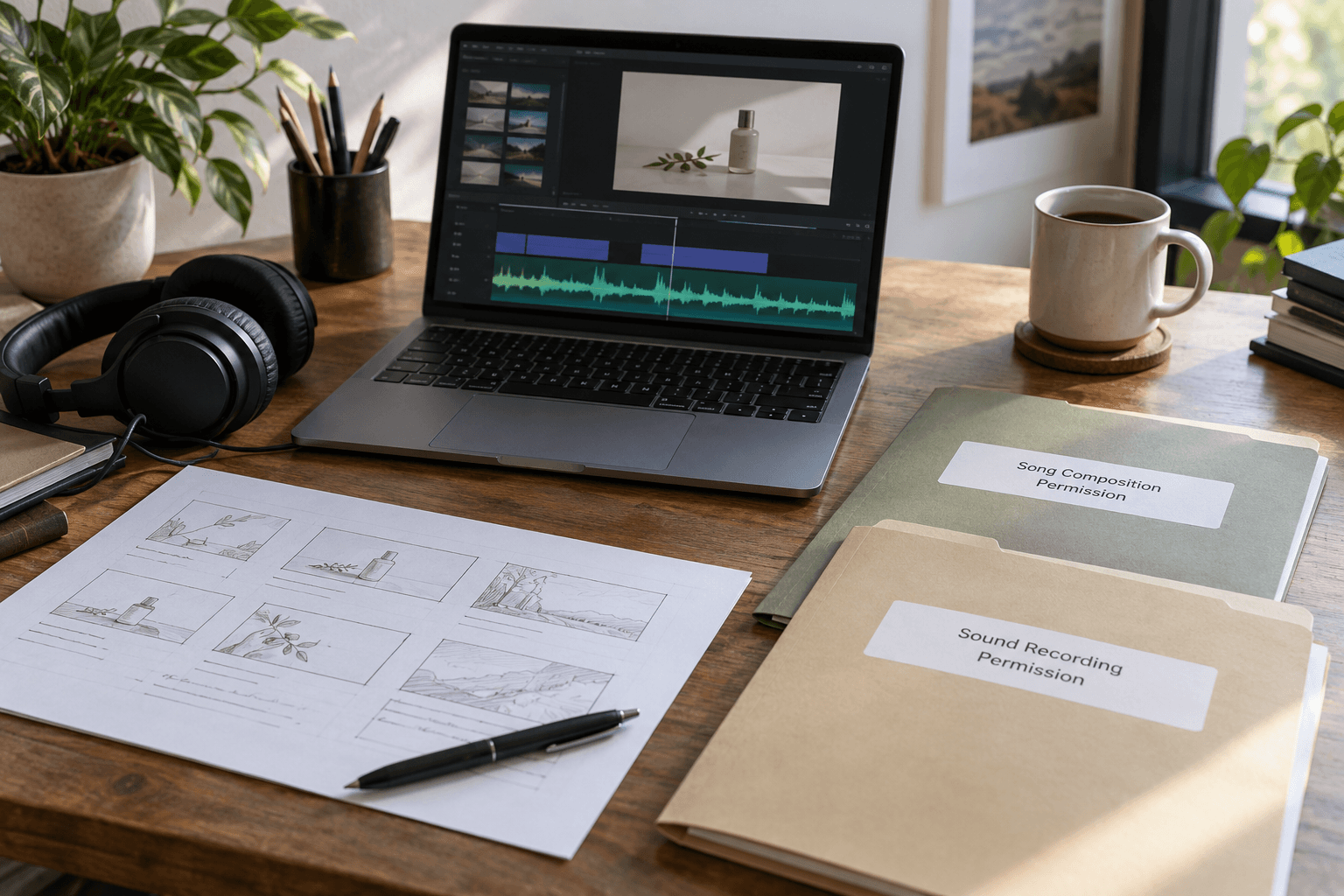
It depends on the music, but most marketing videos need permission for both the song and the recording.
A song usually has two layers of copyright:
- The musical composition: the melody, lyrics and underlying song, usually owned or controlled by songwriters and music publishers.
- The sound recording: the actual recorded version you hear, usually owned or controlled by a record label, artist or recording owner.
If you want to use a famous artist's recording in your ad, you generally need permission for both layers. Getting permission for only one layer can leave a gap.
Common Music Licenses You May Hear About
- Synchronization license: permission to sync the composition with visual content, such as an ad, social video or course video.
- Master use license: permission to use a particular sound recording.
- Public performance license: permission for public performance of music, often handled through performance rights organizations for certain uses.
- Production music or stock music license: permission to use pre-cleared music under set terms, often for business videos, ads and online content.
- Commissioned music agreement: a written agreement with a composer, producer or musician creating a track for your business.
For video, a public performance license alone usually won't be enough. For example, a restaurant may have a license to play music in the venue, but that doesn't automatically let the restaurant use a chart song in a 30-second paid Instagram ad.
Music rights for marketing videos should match the way you plan to use the content. Check the platforms, ad formats, territories, time period, number of videos and whether your use is paid advertising, organic content or both.
Can I Use Platform Music Libraries For Business Social Media?
Yes, sometimes, but only if the platform's terms allow your business use.
Social media platforms often offer music libraries for creators. The catch is that personal accounts, creator accounts and business accounts may have different access and different permissions. A sound that appears in a personal account may not be cleared for your business account, paid ad or branded campaign.
Before you rely on a platform library, check whether the license covers:
- business or commercial use
- paid ads, boosted posts and sponsored content
- organic posts on your business account
- use outside that platform, such as your website or email marketing
- editing, remixing, looping or cutting the track
- use for a client, franchise, partner or affiliate
- your industry, especially if music owners restrict sensitive categories
One common mistake is downloading a social video with platform music and reposting it somewhere else. The platform terms of use may only cover use inside that platform. Once you move the same video to your website, YouTube channel, online course or paid ad manager, you may need a separate commercial music license.
Say Maya runs a fitness studio and makes a 30-second reel using a trending song from an app's personal music library. The reel performs well, so she turns it into a paid ad and uploads the same file to her website. A few days later, the ad is muted and the website video receives a takedown notice. Even though the song was easy to add in-app, the permission didn't cover those business uses.
A safer approach would be to use a business-cleared track and keep a copy of the content license terms with the final video file.
What Happens If I Use Music Without Permission?
If you use music without permission, your business may face takedowns, muted videos, account issues, payment demands or copyright infringement claims.
In practice, the first problem is often operational rather than legal. Your campaign can stop running at the worst possible time. A launch video may be muted, an ad may be rejected, or a platform's content recognition system may block monetization or visibility.
Under the Digital Millennium Copyright Act process, copyright owners can send takedown notices to platforms. If your business receives a notice or claim, move quickly and keep records.
What To Do First
- Pause the content: stop using the video while you work out what rights you have.
- Save everything: keep screenshots, platform notices, receipts, license terms, emails and the version of the video you posted.
- Check the source: confirm where the music came from and what permission was granted.
- Don't ignore deadlines: platforms may give you a short time to respond, dispute or remove content.
- Get tailored help if money or your account is at risk: especially if you receive a demand letter or repeat claims.
If a copyright owner has a valid US copyright registration, they may be able to seek statutory damages in federal court. Statutory damages can be up to $30,000 per infringed work, and up to $150,000 per work for willful infringement. Attorney's fees may also be available in some cases.
Those figures don't mean every dispute becomes a lawsuit. Many issues are resolved by taking content down, editing the video or negotiating a license. But they show why it's worth getting your music rights sorted before you spend money promoting the video.
There can also be brand risks. If your video implies that an artist endorses your product, the Lanham Act, state publicity rights or unfair competition rules may become relevant. That risk is higher if you use a recognizable song, artist name, image or voice in a way that suggests approval.
How Do I Get A Commercial Music License?
You get a commercial music license by identifying your exact use, choosing a licensing route and keeping written proof of the rights your business has.
Start with the practical details. A rights owner or music platform will usually want to know:
- the name of your business and brand
- where the video will appear
- whether the video is an ad, organic post, course, webinar or website video
- the length of the music clip and the length of the video
- how long you want to use it, such as 6 months, 12 months or ongoing
- the territory, such as the United States or worldwide
- whether you can edit, cut, loop or adapt the track
- whether your contractors, agencies or affiliates can use it too
Your Main Options
- Use a stock or production music library: often the simplest option for marketing videos, as long as the license covers your channel and ad use.
- Commission original music: useful when you want a brand sound, podcast intro or course theme. Get the rights in writing, often through a content license agreement, before you publish.
- License a well-known track: possible, but usually slower because you may need approvals from publishers and recording owners.
- Use public domain or Creative Commons music: check both the composition and recording, and confirm commercial use is allowed.
- Use a platform business library: fine for platform-only content if the terms clearly cover your business use.
Music License Agreement Template: What To Include
A template can help you see the moving parts, but music rights are easy to get wrong. A licensed attorney should tailor the agreement before you use it.
- Parties: write the full legal names of your business and the person or company granting the rights.
- Music details: identify the track, writer, performer, recording, version and any stems or edits.
- Rights granted: state whether you get synchronization, master use, reproduction, distribution, public performance or other rights.
- Permitted uses: list the videos, platforms, paid ads, organic posts, website use, courses and internal use covered.
- Term: say whether the license lasts for a fixed period or continues indefinitely.
- Territory: define where the video can be shown, such as US-only or worldwide.
- Exclusivity: state whether anyone else can use the same music.
- Fees and payment: set the license fee, payment timing and any additional charges for expanded use.
- Editing rights: say whether you can cut, loop, remix, fade or adapt the music.
- Credits and approvals: include any credit wording, approval rights or brand restrictions.
- Warranties: require the licensor to confirm they own or control the music rights they are granting.
- Indemnity and claims: set out who is responsible if a rights claim is made.
- Record keeping: attach the license terms, invoices and approved versions so your team can find them later.
Frequently Asked Questions
Can I Use 10 Seconds Of A Song?
Not safely just because it is 10 seconds. There's no fixed US rule that makes a short clip automatically legal, especially in commercial marketing.
Does Giving Credit Make It Legal?
No. Credit can be required under some licenses, but it doesn't replace permission. You still need rights that cover your business use.
Can I Use Music In Internal Training Or Online Courses?
It depends on the license. Internal training, paid courses and member-only content can still involve copying, syncing and performing music, so check for education, e-learning and commercial use rights.
Is Royalty-Free Music Free To Use Forever?
Not always. Royalty-free usually means you don't pay ongoing royalties, but the license can still limit platforms, ads, territory, duration and types of projects.
Key Takeaways
- Most business videos need permission before you use copyrighted music, especially ads, social posts, courses and website videos.
- A song can involve separate rights in the composition and the sound recording, so one permission may not be enough.
- Platform music libraries can be useful, but they may not cover paid ads, business accounts or use outside that platform.
- Using music without permission can lead to takedowns, muted campaigns, account issues, payment demands and infringement claims.
- A written music license agreement should spell out the platforms, term, territory, editing rights, fees and permitted business uses.
- Keep a simple rights folder for every video so your team can prove what music was licensed and where it can be used.
If you'd like help with music license agreements, commercial video rights or checking whether your marketing content is properly cleared, you can reach our team at (888) 449-8437 or team@sprintlaw.com. Where legal services are required, they're provided by licensed US lawyers at ElevateNext US, LLC, a trusted US law firm, through the Sprintlaw platform.
Drafted by Taylor, Sprintlaw's AI, and overseen by Alex Solo. How we write

Alex SoloCo-Founder