Alex is Sprintlaw's co-founder and a legal technology leader. He holds law and media degrees from the University of Sydney and has been recognized by Australasian Lawyer, Lawyers Weekly and the Sydney Young Entrepreneur Awards for his work building Sprintlaw and improving access to business legal support.
Contents
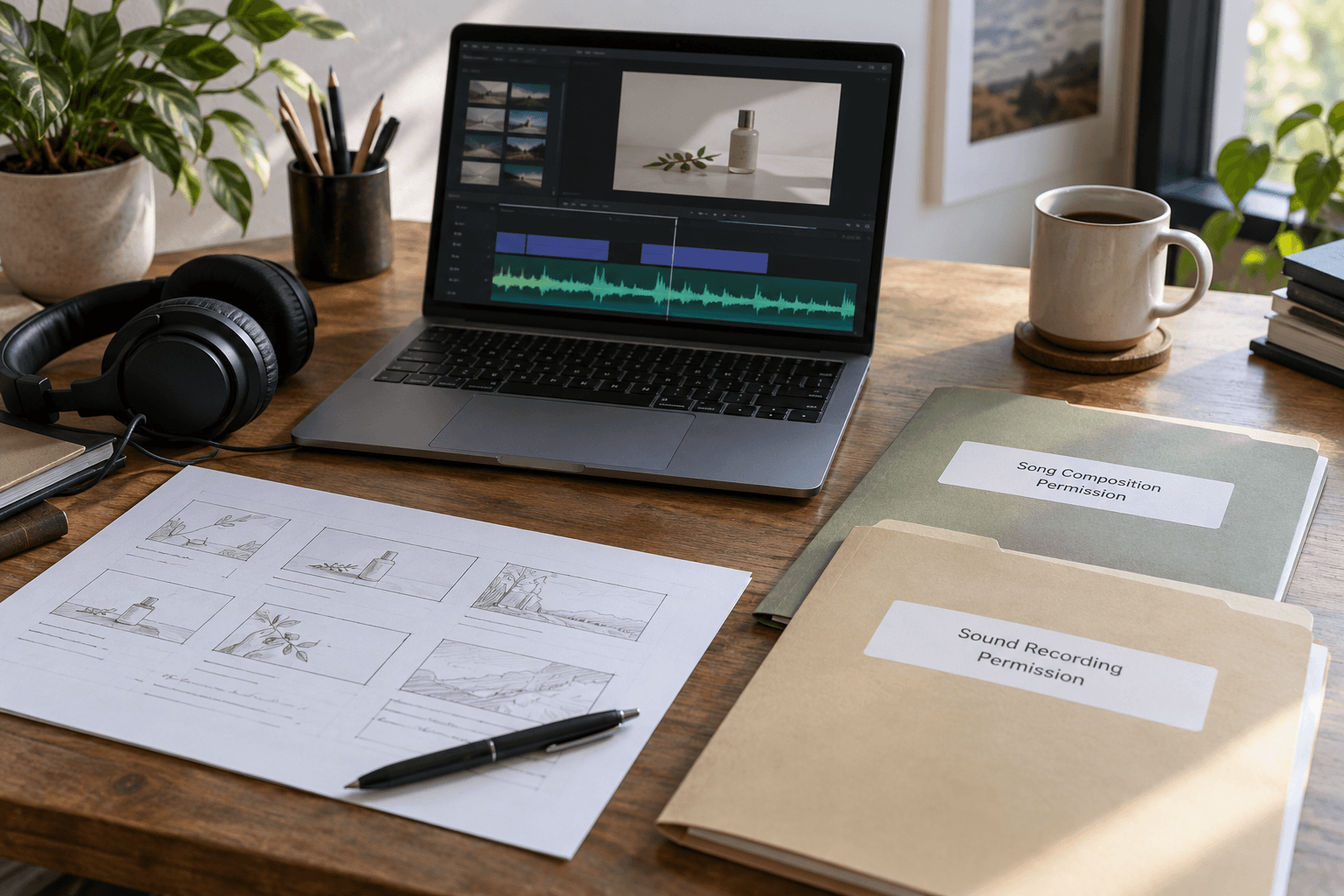
Maya runs a skincare brand and finds the perfect song for a 30-second product video. The artist says she can use it, the video starts performing well, and then a platform flags the track because the record label and publisher never approved the commercial use.
That situation is more common than you might think. Music rights are layered, and getting one yes doesn't always mean you have all the rights your business needs.
The good news is that music licensing doesn't have to feel mysterious. Once you know the difference between the master, the composition, sync rights, distribution rights and platform permissions, you'll know what contract to ask for and what to check before you launch.
What Rights Do You Need To License Music For Commercial Use?
You usually need permission for every copyright right your business will use, and that often means more than one license.
Under the US Copyright Act, music can involve several separate rights, including the rights to reproduce, distribute, publicly perform, publicly display and create derivative works from copyrighted material. In everyday business terms, that means you need to ask what you're actually doing with the music.
For example, your business might be:
- Adding a song to a product advertisement
- Using background music in social media videos
- Distributing a track through streaming platforms
- Putting music inside an app, online course, game or podcast
- Playing music in a venue, store, gym, cafe or event space
- Remixing, editing, looping or sampling part of a track
Each use can trigger a different permission. A license for organic social media posts might not cover paid ads. A license for one country might not cover worldwide use. A license for one platform might not cover your website, email campaigns or in-store screens.
Commercial use simply means you're using the music for your business, brand, products or services. It doesn't matter that the post is free to watch. If the music supports your marketing, customer experience or revenue, treat it as commercial.
You'll also want to check whether any names, logos, artist images or band names are being used. Copyright covers the music itself, but brand names and source identifiers can raise trademark issues under the Lanham Act, and endorsement-style content can create extra advertising risks.
Do You Need A Master License And A Composition License?
Yes, if you're using an existing recording, you generally need both a master license and a composition license.
This is the part that catches many businesses out. A song isn't one single legal asset. It usually has at least two copyright layers.
The Master Recording
The master is the specific recorded version of the song. If you use the artist's actual released track in your ad, podcast intro, app or video, you're using the master.
The master may be owned or controlled by a record label, an independent artist, a producer, a distributor or another rights holder. You need the right person or organization to approve your use in writing.
The Composition
The composition is the underlying song: the melody, lyrics and musical work. It may be owned or administered by songwriters, music publishers or a rights administration company.
If you record your own cover version, you may avoid needing the original master recording license, but you still need rights for the composition. If you change the lyrics, sample a hook, translate the song or create a remix, you may need extra approval because you're adapting the musical work.
Public domain can also be tricky. A very old composition may be in the public domain, but a modern recording of it may still be protected. So, using a 2024 orchestra recording of an old classical piece could still require a master license.
A good music licensing agreement, or broader IP license, should clearly say whether it covers the master, the composition or both. If it doesn't, pause before using the track.
Can You Use A Song In An Advertisement?
Yes, but you generally need sync rights for the composition and a master use license for the recording before you use a song in an advertisement.
A sync license lets you synchronize music with visual content, such as a product video, YouTube pre-roll ad, TV commercial, Instagram Reel, TikTok ad, website banner video or training video. There's no automatic compulsory license for most advertising sync uses. It's usually negotiated directly with the rights holders.
Say Luna Coffee licenses an indie artist's released track for a 30-second social ad. Luna plans to spend $8,000 on paid media, run the ad for 6 months, and use it on Instagram, TikTok, YouTube and its website in the United States.
Luna's agreement should say, at a minimum:
- The license covers both the master recording and the composition
- The permitted use is a 30-second coffee product advertisement
- Luna can make 15-second, 30-second and 60-second edits
- The license covers paid ads, organic posts and website use
- The territory is the United States
- The term is 6 months from the campaign launch date
- The fee is fixed and any extra royalties are clearly addressed
- The artist's credit is optional or stated clearly
- Luna can't imply the artist personally endorses the coffee unless that endorsement is also agreed
If Luna later wants to use the same ad on national TV, extend the campaign to 18 months, or run it worldwide, it should get a written amendment or new license. Otherwise, Luna may face takedowns, platform blocks, extra fees or infringement claims.
What Should A Music Licensing Agreement Checklist Include?
A music licensing agreement checklist should identify the music, the rights being granted, the business use, the money, the restrictions and what happens if something goes wrong.
A music license agreement template can be a helpful starting point, but music deals are very fact-specific. Templates often miss the exact rights, platforms and campaign details that matter most, so have an attorney tailor the document before you rely on it.
Here's a practical outline you can use when briefing your attorney or reviewing a draft:
- Parties: List the legal names of your business and each rights holder or authorized representative.
- Track Details: Identify the song title, recording, artist, writers, publishers, label, ISRC, ISWC and any relevant catalog information.
- Rights Granted: Say whether the license covers the master, composition, sync, reproduction, distribution, public performance, editing, remixing or sublicensing rights.
- Permitted Use: Describe exactly how your business will use the music, such as a product ad, app feature, podcast intro, course module or platform distribution.
- Platforms And Media: Name the channels, including social platforms, websites, streaming services, TV, radio, apps, events, in-store screens and paid advertising networks.
- Territory: State whether the license is US-only, worldwide or limited to certain markets.
- Term: Set the start date, end date, renewal process and what happens to existing content after expiry.
- Fees And Royalties: Record any upfront fee, revenue share, royalty rate, payment timing, reporting obligations and audit rights.
- Approvals And Edits: Say whether you can cut, loop, fade, remix, caption, translate or combine the music with other content.
- Warranties And Indemnities: Require the licensor to confirm they control the rights they're granting and set out who covers losses if that's untrue.
- Exclusivity: State whether the license is exclusive, non-exclusive, category-exclusive or campaign-exclusive.
- Termination: Explain when either side can end the agreement and what takedown or wind-down steps apply.
- Governing Law And Disputes: Choose the contract law that applies and a practical process for dealing with disagreements.
State law can affect how contracts are interpreted and what remedies are available, so it helps to get tailored advice for higher-value deals, unusual rights or long-term arrangements.
Is A Music Distribution Agreement The Same Thing?
No, a music distribution agreement is different from a music license for commercial use, although the two can overlap.
A music distribution agreement usually deals with getting music onto platforms, stores or services. For example, an artist or label might give a distributor the right to deliver tracks to streaming platforms, collect revenue, manage metadata and issue takedowns.
If your business is distributing or monetizing music, your agreement should address distribution-specific rights, such as:
- Which tracks, albums or catalogs are covered
- Which platforms and territories are included
- Whether the distributor can sublicense to platforms
- Who controls metadata, artwork and release dates
- How streaming income, download income and other revenue are calculated
- How often statements and payments are made
- Who handles platform claims, takedowns and Content ID conflicts
- What happens when the term ends and tracks need to be removed
Platform rights matter because services have their own terms of use. A distributor may need permission to reproduce, transmit, store, encode, publicly perform and display music and related artwork so the platform can operate properly.
Mechanical licensing may also come up when musical compositions are reproduced and distributed. The Copyright Act includes a compulsory mechanical license system for certain uses of nondramatic musical works, and digital music providers may deal with mechanical rights through the Mechanical Licensing Collective. That said, advertising, video sync, lyric changes, samples and many branded uses usually need direct permission instead of relying on a compulsory path.
If your business isn't a music company but you're adding music into a product, app or marketplace, don't assume a distribution agreement is enough. You may also need a commercial use, sync, platform, content license or sublicense clause.
Common Mistakes To Avoid
The most common mistake is assuming that a friendly email, a platform music library or the words "royalty-free" cover every business use.
Here are the traps to watch for:
- Only Clearing One Layer: You get the artist's approval for the recording but don't clear the publisher's rights in the composition.
- Using Platform Music Outside The Platform: A social media music library may let you use a track inside that app, but not in paid ads, on your website or across other channels.
- Forgetting Paid Advertising: Organic social rights may not include boosted posts, paid campaigns, affiliate ads or whitelisting.
- Ignoring Co-Owners: Songs can have multiple writers, publishers, labels or producers. One person's approval may not bind everyone.
- Leaving Out Edits: Cutting a song to 15 seconds, looping a chorus or adding a voiceover may need express permission.
- No Expiry Plan: If the license ends, you need to know whether old posts can stay live or must be removed.
- No Paper Trail: Without a signed agreement, you may struggle to show a platform, advertiser or buyer that your business has the rights it claims to have.
Also be careful with artist endorsements. If your ad suggests that an artist recommends your product, you may need a separate talent, publicity, endorsement or trademark license agreement. The FTC Act and FTC endorsement guidance can also matter if there's a paid promotion or material connection that customers should know about.
Frequently Asked Questions
Can I Use A Music License Agreement Template?
Yes, you can use a music license agreement template as a starting point, but it shouldn't be treated as a finished contract. The wording needs to fit your track, rights holders, platforms, territory, term and commercial use.
Who Usually Owns The Rights To A Song?
The rights may be split between songwriters, publishers, artists, record labels, producers or rights administration companies. Ask the licensor to confirm exactly which rights they control and whether anyone else's approval is needed.
Do I Need To Register Copyright Before Licensing Music?
No, copyright exists automatically when an original work is fixed in a tangible form. Registration with the US Copyright Office isn't required to license music, but it can be important for enforcement and should be checked if rights ownership is a concern.
What Happens If My Music License Expires?
You need to follow the contract. That may mean renewing the license, removing the content, stopping paid ads, deleting platform uploads or getting written permission for continued use.
Key Takeaways
- Music rights are layered. A commercial use may need master, composition, sync, distribution and platform rights.
- If you use an existing recording in an ad, you usually need permission for both the recording and the underlying song.
- Sync rights for advertising are usually negotiated directly and should cover your exact campaign, platforms, territory and term.
- A music distribution agreement isn't the same as a commercial use license, although platform and sublicense rights can overlap.
- Templates can help you organize the deal, but the final contract should be tailored to your business and the specific music use.
- A clear written agreement helps you avoid takedowns, unpaid royalty disputes and problems when investors, buyers or platforms review your rights.
If you'd like help with your music licensing agreement, sync rights, distribution rights or commercial use clearances, you can reach our team at (888) 449-8437 or team@sprintlaw.com. Where legal services are required, they're provided by licensed US lawyers at ElevateNext US, LLC, a trusted US law firm, through the Sprintlaw platform.
Drafted by Taylor, Sprintlaw's AI, and overseen by Alex Solo. How we write

Alex SoloCo-Founder